Tuesday, August 25, 2020

Weekly Nature Challenge and Update

 Hi everyone! As you have most likely noticed, both Kate and I have not been writing much lately. This is because of the start of school. Since school will be (and already is) taking up a lot of our time, we will only be able to write every two weeks, instead of every week, though I will try to still post a Weekly Nature Challenge. Speaking of this, here is this week's Weekly Nature Challenge:

Help the Migrating Birds

While we are starting school, the birds are starting the fall migration. This means lots of cool birds will be passing through on their way on migration! I have already been fortunate enough to see a passing Loggerhead Shrike, a first-time-sighting for me. One way you can help migrating birds is too put out food and water, especially water, what with the big fire and everything being so dry. A simple bowl of water on a stump or wooden post would do the trick. Food can be anything from an elaborate bird feeder to some sunflower seeds sprinkled on your front porch. You can also help by making your windows more visible. In other words, make sure the birds can see not to bang in to your windows, or fight with their reflections. You can put up hawk silhouettes or pictures if you want, but we just don't clean our windows as often, and we also have those little gel stickys. Last but not least, avoid using harmful pesticides. Not only do these kill bugs that can help your garden, but it also kills many birds when they eat the poisoned bugs. Have a good rest of your week, and keep an eye out for new birds! 

-Lili

Thursday, August 6, 2020

Weekly Nature Challenge #1

Today is the first Weekly Nature Challenge: The Food Chain Game!

How You Play:
Find something from the bottom of the food chain - grass, trees, berries, ect. Then, find something that eats that thing, for instance, grasshoppers and aphids eat grass, golden mantled ground squirrels eat berries, and deer eat aspen leaves. Then, find the next animal - a mouse might eat a grasshopper, ladybugs love aphids, a coyote would like a golden mantled ground squirrel, and mountain lion prey on deer! (Not that I have ever seen a mountain lion!) However, it is not always possible (like here) to get to the top of the food chain, so if you can't, you can also see who gets the highest in the food chain by the end of the day. It's a fun game, and I hope you have a lot of fun!

-Lili 

Sunday, August 2, 2020

A Few More Things About Moab

A Few More Things About Moab
- Kate


A Nest in the Sun
While I was in Moab, I went to a place called Hole in the Rock. It was a lot of fun, but one thing I really liked was getting to see a bird's nest in the eye of a sun! Here are some pictures of the bird's nest:


A Weird Bug
While my family was at the colorado river, we saw this weird bug. It looked dead, and almost like a skeleton. Here are some pictures:


A Few Extra Pictures
Here are a few extra and random pictures that I took in Moab:


Wednesday, July 29, 2020

The Cottontail Rabbit

The Cottontail Rabbit
- Kate

          The cottontail rabbit is a very common rabbit in Colorado. They might seem like annoying pests, always eating people's lawns and leaving spots of dead grass all over the grass. Yes, it is true that they can be pests, but they are also very interesting animals. Here are some facts about this rabbit and how it can be more than just a pest. Most of these facts are about eastern cottontail rabbits, but there are also facts that can relate to all types of cottontail rabbits.

Habitat
          The cottontail rabbit likes to live in meadows or fields but also adapts to living with humans. They usually like to nest under bushes or decks, where they are safer than they are out in the open. Most also dig holes in the ground, almost like a prairie dog. They will make their nests in fireplaces and flowerbeds too.

Food
          Cottontail rabbits eat grasses and herbs, and will also eat things from your gardens such as flowers or veggies. They usually feast at night, so it is hard to prevent them from eating your vegetation. Although they will also eat throughout the day too. They will eat bark and sticks during the winter when other food isn't as available.

Looks
          The cottontail rabbit is mostly gray or brown. The young look a lot like the adult rabbits, just cuter. They have a small white tail, kind of like a cotton ball. They don't grow to be very big, and they can blend in with their surroundings well.

Cottontail Rabbit Juvenile 

Fun Facts
  • They are very fast
  • They can jump about 1-2 feet into the air (I've seen them do it 😂)
  • Scientific Name: Sylvilagus floridanus 
  • Produce 3-4 litters of young per year
  • Like to live in one area for most of their lives
  • It's a lot of fun to watch them fight and play 😁
  • For more facts, you can go to https://www.wildlife.k-state.edu/species/cottontail-rabbits/index.html or search "cottontail rabbit fun facts"

Tuesday, July 28, 2020

Coyotes


How They Look

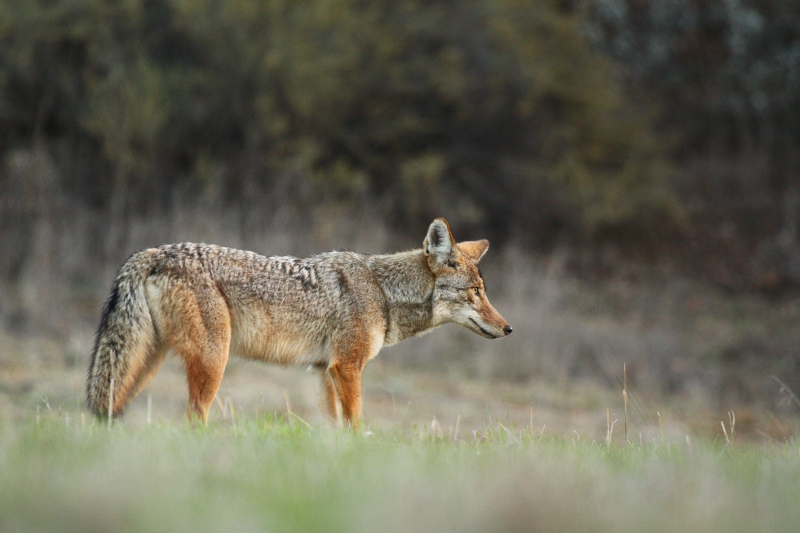
Coyotes range from grey to light brown, resembling large, shaggy dogs. Their bodies are lean and muscular, because they have to be strong runners to catch food. 

They have  wedge shaped faces and large, pointed ears that help them to hear their prey. Their backs are usually grey to speckled black and they have big, bushy tails with black tips. Pups look like scrawny, mini adults, though their tails are not really bushy. They are smaller than wolves, although they are often known as prairie wolves or bush wolves.


What They Eat

Coyotes are omnivores, which means they eat both meat and vegetation, as well as opportunistic eaters, which means that they are not picky eaters. They will eat just about anything: rodents, carrion, fish, deer, even insects, among many other things. Sometimes they will even eat garbage! They enjoy a wide range of foods. Coyotes are mainly nocturnal - they usually hunt at night. They usually hunt alone, although they will often form packs in the fall and winter when food is hard to come by.


Where They Live

Coyotes can be found across North America, and their numbers are increasing due to their large ability to adapt. They were formerly found mainly in wild areas, like grasslands or deserts, but can now be found everywhere including urban environments. They can even be found in busy cities.


Other Facts

1. Coyotes have litters of 3-12 pups.

2. They can run up to 40 miles per hour

3. They are excellent swimmers

4. Coyotes mate for life

5. They can live up to 20 years in captivity.


Conclusion

Although many people dislike coyotes and think of them as pests, coyotes are actually just another animal trying to survive. I find coyotes very interesting because they can be found right in my backyard - literally - and in the city too. I think we should all strive to learn more about the animals around us.


Source of Information:                   Source of Photos:

National Geographic                      Urban Carnivores

American Expedition                      Youtube

Animal Sake                                   Ninnescah Biology Field, Kansas


-Lili


Monday, July 27, 2020

Coyote

I have some exciting news! So, apparently, we have a coyote in our backfield!!! I haven't actually seen it, but my siblings and my dad have, and it's pretty big! I will try to post a picture as soon as I can get one, but I don't know when that will be.😁

Wildlife in Moab

Wildlife in Moab

Moab is a very different environment from Westminster, Colorado. Moab is in Utah and is in a very hot and dry environment. This effects both plants and animals. I am on vacation in Moab and I'm going to post some pictures and share some facts about what lives in Moab.
- Kate


Canyons

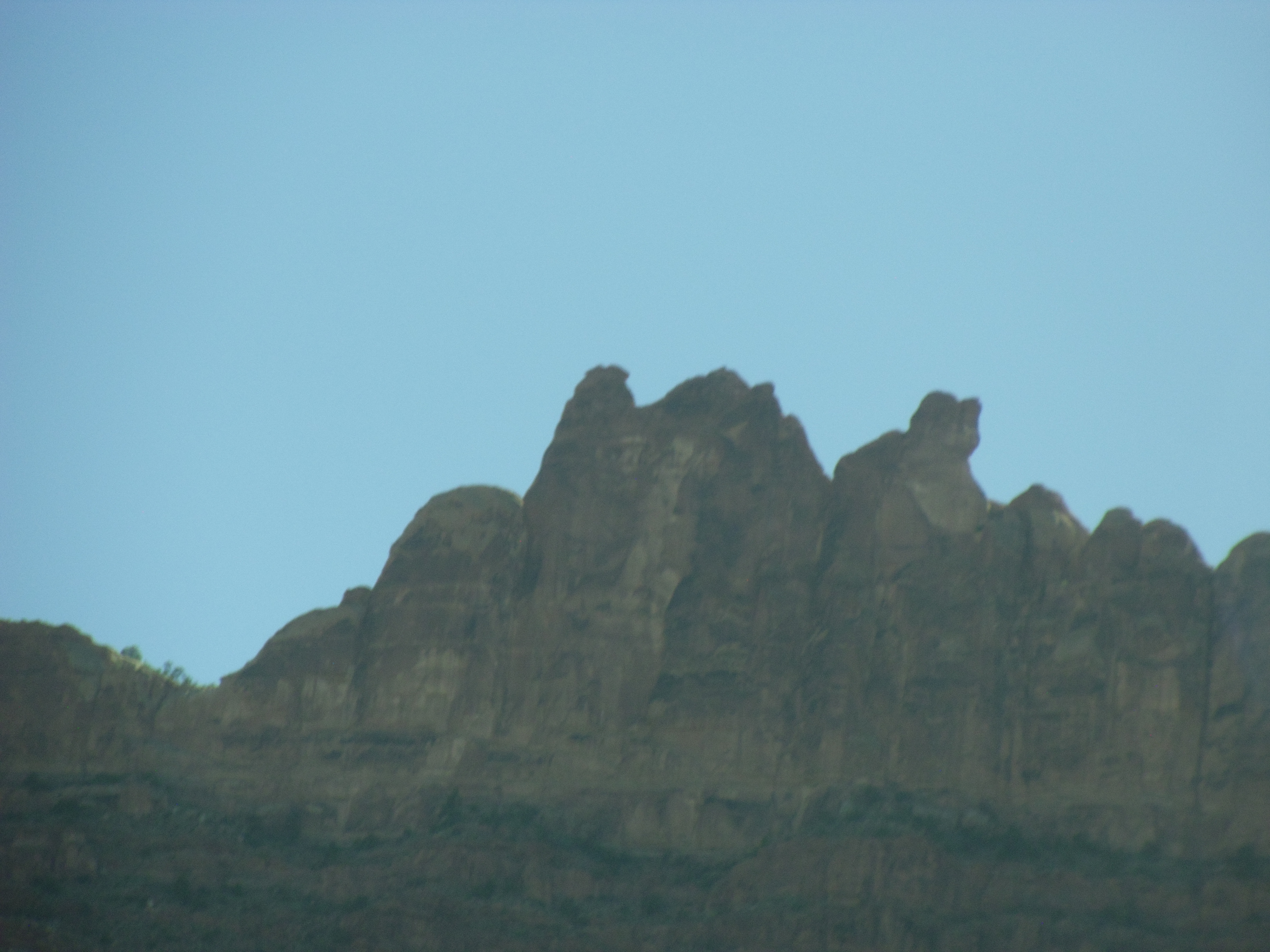
There are tons of canyons in Moab. They are rock with a few plants scattered around. These canyons make you feel like a little ant with a super tall tree right next to you. There isn't much to say about them, but I have a picture below.


Animals

There are a lot of different types of creatures in Moab, but I didn't get a lot of pictures. I did get some pictures and videos of bats though. It's hard to see them because they're fast, but you can catch glimpses.


Fall Photos

Fall is a beautiful time of year! The leaves change from green to beautiful shades of red, orange, yellow, and purple. A perfect chance for ...